KOKOMO
  • HOME
  • ABOUT US
    • HISTORY >
      • From 1991-1999
      • 2000-NOW
      • DISCOGRAPHY
      • FESTIVALS
    • KOKOMOLAND >
      • TEAM KOKOMO
  • ALBUMS
    • FUTURA (2024)
    • WORKHORSE (2022)
    • FROM THE ATTIC (2021)
    • SUNSET CLAWS (2019)
    • KOKOMO albums
    • KOKOMO BLUES albums
    • SIDE PROJECTS
  • BIGGER THAN BRANDO 10th
  • GIG GUIDE
  • LISTEN & WATCH
    • GALLERY >
      • PHOTO GALLERY
      • NATIONAL JAZZ FESTIVAL 2023
    • VIDEO & AUDIO
  • DEREK'S BLOG
  • CONTACT

The Futura Motel

6/10/2024

0 Comments

 
Since at 12 minutes the video for Futura Motel is certainly the longest and most challenging music video I've so far worked on, containing imagery from a bunch of different sources - NASA to a 15th/16th century painting - I thought perhaps you might be interested in what some of the bits are and how and why they came to be in the video...

The initial inspiration came from a sculptural piece from Papamoa artist Alex Miln called 'Futura Motel'. This picture does it no justice as it is a large 3-dimensional "motel sign". For an imaginary motel of course. It's an amazing bit of work. Even the rust has been hand-painted by Alex. His work takes a massive amount of time to complete and is breathtaking to view in person. You can see more of it HERE
Picture
Here's how I approached things...
Since the song suggests a dystopian future I wanted the imagery to reflect that.

I started by generating literally hundreds of AI images of motels in various styles with the AI generator at Gencraft, some of which I then tweaked into faux 3D with another AI programme.

What you see in the video is only a very small sample of what I created. I didn't initially know which direction to take with the motels so I have dozens of pictures of flood-ravaged motels, dozens of pictures of motels in dust storms and overgrown by jungle and – most of all – on fire. Hundreds of those. The first edit was an almost endless stream of motels on fire.

As you'll notice in the lettering on the signs, some AI generators - like this one - are crap at generating actual writing. Others aren't bad...
Picture
Picture
Picture
Picture
Picture
Picture
But the video also needed moving images and I hit upon using sections of the German 1927 Fritz Lang film Metropolis, which after a series of contradictory court decisions seems to be back in the public domain (it went in then out then in again I believe...). The black and white workers come from there as do the pipe-playing skeletons which I "night-visioned".
Picture
Picture
Picture
Picture
All the early footage is courtesy of NASA and I'd highly recommend you check out their on-line presence as there is a treasure chest of fantastic film and the most extraordinary images there.
Picture
The only other significant imagery comes from a long time ago - painted between 1490 and 1510 - and the artist Hieronymous Bosch. I initially used a lot more Bosch, particularly some of the darker weirder stuff – and there's plenty of that and it is astonishingly dark and weird! - but in the end simplified it to just this 3D walkthrough of an extract from The Garden Of Earthly Delights. Light and weird instead of dark...
Picture
Picture
Picture
For anyone interested in editing I did it all on NCH Video Pad but am planning to upgrade when i get a boost in computing power. My current machine is too old to run the updated drivers. Oh well...
Anyway - hope you enjoy the video. In case that has whetted your appetite and you want to watch it again, here it is.
Picture
0 Comments

The Futura Experience...

28/8/2024

4 Comments

 
Picture
Picture
Picture
Most people look sideways at me when I say that we're about to release an electronica album. And that the 'title track' is 12 minutes long. More than a few fellow musicians have suggested that this will alienate most of our fan base. A few seemed generally amused by that and I hold no animus - if we can't enjoy our friends' misconceived disasters then who can?

But bluesman Grant Haua - no stranger to taking risks himself - was excited by the concept and our good friend and electronica expert John Heighes, working down at Flying Nun in Wellington, reckons there's really no such thing as electronica any more anyway... and he likes the album.

FUTURA  was originally intended as a companion-piece to WORKHORSE. The idea was that Workhorse would be a regular "blues" album and 6 months later we'd release FUTURA, half the same songs but in electronica versions and half new songs. So two albums, with crossovers, one traditional and one experimental.

But of course we got derailed. So two years later, here we go, Plan B...

Pretty much all independent albums these days are labours of love, and definitely this one. We do not, as you've probably noticed, use electronica live; this is a departure from our usual band sound. But this is intended for home listening - we don't plan to play these songs like this live. In fact we are already well underway recording the next - regular! - Kokomo album, KOKOMO'S PAIN-KILLING MYSTERY BALM.

FUTURA exists because Nigel and I share a love of Swiss titans Yello and Brixton anarchists Alabama 3 (known for the 'Sopranos Theme'). Apolitical Euro-cool meet dirty left-wing London. Perhaps uncoincidentally they're both “song” bands not simply groove merchants. We like songs. So these are largely songs (there's one instrumental, one with very few words). We hope you'll give the new sound a chance - we realise it's a long way from acoustic blues. But that's cool. 

I better stop. I'll do another blog about the actual songs in a few days' time. Till then...


4 Comments

What is this thing called mastering anyway?

31/5/2022

0 Comments

 
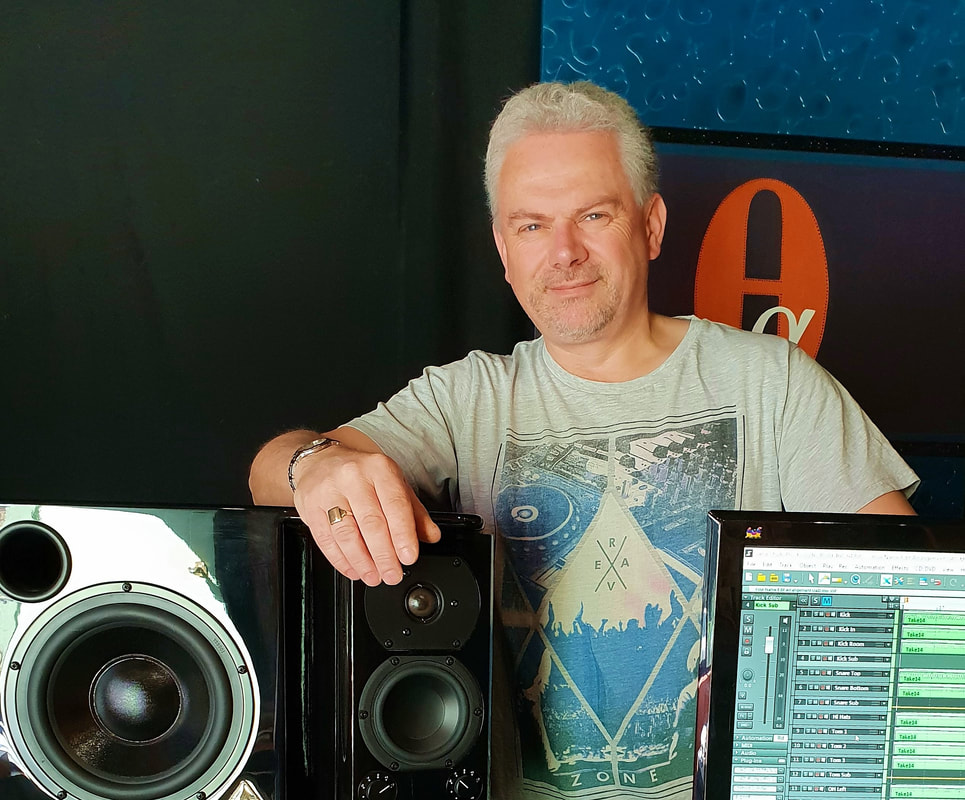
PictureTim Julian
Mastering? If there's any part of recording that confuses people it's mastering. When I get to boring folk with talk of the new recording, the question I hear most often is “what is mastering?”.

So let me have a quick run at this – and I will keep it brief since it can be the sort of technical thing that makes eyes glaze over pretty quickly. I'll do my best not to make it too boringly nerdy despite my ever-present nerdish tendencies.

Basically mastering is the icing on the cake of a recording, a sort of brush and polish that happens after the recording is mixed. So what does that mean?

In our case, Nigel and I recorded and mixed Workhorse at the Boatshed Studio in Whakamarama and then sent it across town to Tim Julian at The Colourfield in Welcome Bay, who has all sorts of flash specialist equipment for mastering that Nigel doesn't at The Boatshed.


At its most basic, mastering will do this:
  • make all the songs of equal volume
  • make that volume as loud as possible (so your songs aren't quieter than other songs on the radio or Spotify etc)
  • even up the frequencies (rooting out any harsh tones that have slipped through, adding a little more of anything that's missing)
  • make sure that each song has the same frequency balance (the same levels of bottoms/bass, mids, and tops/high frequency
 All these sound like things that could be done while mixing but, as I say, Tim has much more specialised equipment so can do a more detailed job.

The way mastering makes the recording louder is essentially by applying compression. Compression is where you squash down the loudest bits. That means you can then turn the overall volume up without those peaks being too loud and distorting.

There has been much complaint in recent years that to get songs as loud as possible – to stand out better on phones through headphones - too much compression has been used and the music has lost its dynamics (no loud and quiet). We wholeheartedly agree. Consequently we try and compress as little as possible to allow for dynamics. Our albums may be a little quieter than some but we like the sound better.

It is also possible to aim this compression quite specifically so it will affect only certain frequencies or certain places in the mix (e.g. just the left and right of the mix so it doesn't affect the voice in the middle). Tim regularly uses this to “tighten up” the bass sound, getting the low frequencies to be more punchy. He also uses it to add “sparkle” at the top making things like cymbals and tambourines a little more vibrant.
Picture
Tim Julian again!
Of course you can really go to town with mastering by adding targeted effects. For instance, if you have a guitar part on the right hand side that is predominantly at a specific frequency, you could target effects – chorus, reverb, whatever – to that particular frequency specifically on the right hand side and essentially change the sound or volume of that instrument alone. So you can do all sorts of clever stuff, depending on how much time and money you have to throw at it....

But we keep it simple. We look to Tim for just the icing on the cake. We've already baked the damn thing at great length and it's just the way we wanted it so Tim just adds that extra 5% of fairy dust. And every bit of magic helps!

Just as an example - here's a minute of I'm Going Fishing - first verse unmastered, second verse mastered. It's quite a difference!

Picture
0 Comments

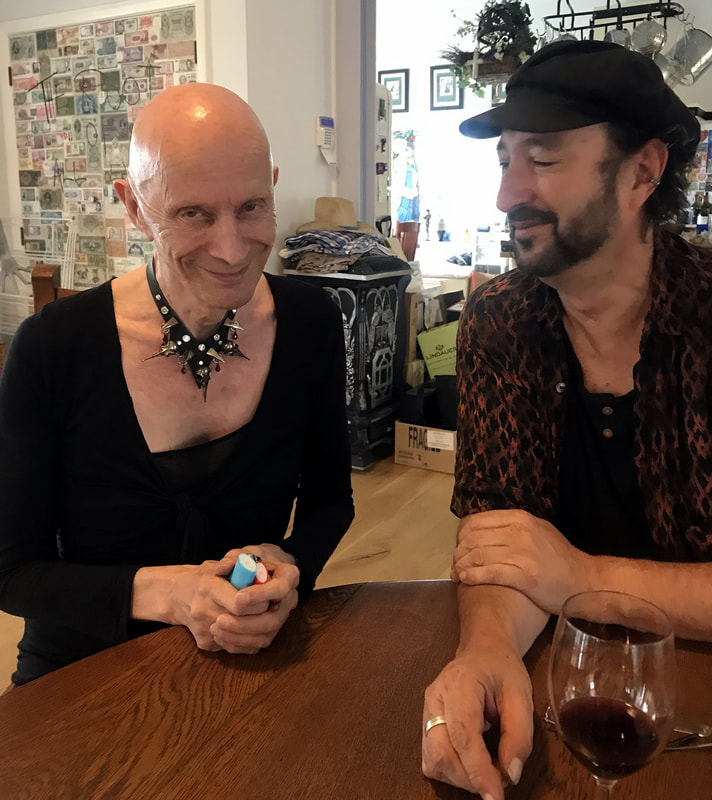
Richard O'Brien kicks Derek's lazy ass

2/5/2022

0 Comments

 
Picture
I was inordinately pleased with myself after writing Born To Bad Luck, until Richard O'Brien buggered it up.

The song, as first written, was a crack at one of those classic blues structures, a structure that has one line repeated three times and then a rhyming line at the end. It's one line longer than yer typical 12-bar blues and the first example that pops into my mind is Leadbelly's take on See See Rider. There are hundreds of others.

The blues is like that with structures - there are common ones that crop up over and over. Like many songwriters I have a "bucket list" of styles I'd like to write songs in and this was a good chance to knock that one off!

Since we were planning an album of blues songs - as much as we plan anything - this seemed like a real winner, since it required very few words, which suited me fine. I have always been a sucker for songs with a lot of words but after all these years I know just how much work that takes (or at least takes me). I am a very lazy writer. That made the idea of an "quick" song without a lot of words very appealing... each verse would effectively be only two lines (one repeated three times then the rhyme) – easy!

And, actually, it was. Of course when you're working in such minimalist territory you want to make sure all the lines are good ones but, hey, that's just basic quality control, par for the course.

So not long afterwards I happened to be out at Richard O'Brien's place of an afternoon. Richard is a friend; we often try out new songs on each other.
And of course Richard likes his rhymes. Fair enough too. Without exaggeration I regard him as one of this planet's most agile and imaginative rhymers when it comes to poetry or song. So when he offers opinions I tend to listen.

Long story short, Richard was unimpressed. He pooh-poohed all those repeated lines as being, well, what they were really - laziness. In the nicest possible way of course. And deep down I knew it too but I hoped I could get away with it.

So I asked him to help. After writing it one way the last thing I wanted to do was start again.

“C'mon Richard” I said, “You could whip out a few fun rhymes and clever lines.”

He declined.

I had another crack at it, but I really couldn't think of anything interesting so I asked him again. No dice. So I did what I knew (and he knew) I needed to: knuckled down and spent a couple of weeks actually doing the work. 

And, as he usually is, Richard was right. It's much better now. Nothing lazy or throwaway left - I reckon it's a fine lyric and I'd be happy to take it anywhere.

I sang it originally, in that first version, way back during lockdown in 2020 – here's a verse from that, with the simple lyric, and the same verse, rewritten, from the new recording due to be released on May 14th.

Picture
0 Comments

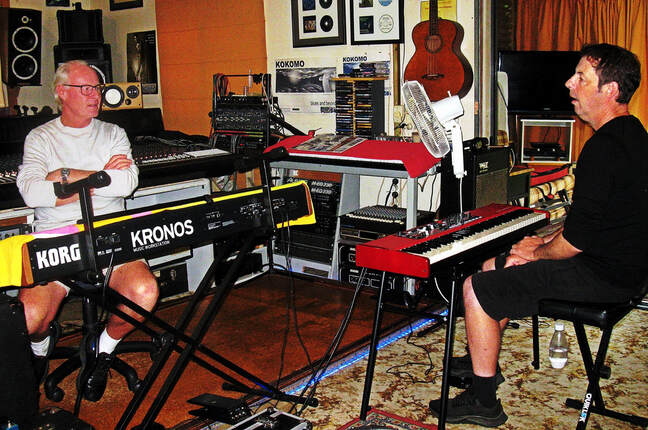
Grant Winterburn in the house!

29/4/2022

1 Comment

 
Picture


Grant Winterburn? We've known Grant since before the band even got together. He played on the Kokomo Blues album To Be Or What nearly 30 years ago, and I've felt bad about it ever since. Let me tell you why...

Grant was the most amazing keyboard player we knew. Probably still is. When I first started playing solo in the mid-eighties at Tauranga's Saint Amand Hotel Grant, who I think was still at school at the time, played with the band in the upstairs bar, Hit And Run. Along with a guitarist who set fire to his axe, Grant, who regularly threw his keyboard around the stage like his heroes, was the talk of the town.

(Just as an aside, it was John Terry, frontman of that band, who wrote and donated us the song Freight Train – it has been a fan favourite now for 30 years, thanks John!)

Grant was also winning awards at the National Youth Jazz Band Competitions at Tauranga's annual jazz festival and a couple of years later headed down to the music school in Wellington.

It was down there that we recorded To Be Or What (1996) in the famous Studio 2 at Radio New Zealand's headquarters. And since we could bring in musicians of our choice we asked Grant to play on the very first recording of Rainy Night In Taupo.

The only problem was that we hadn't properly thought it through and although what we wanted was for Grant to show off his amazing keyboard chops, we hadn't really arranged the song that way and hadn't really left any space for him to play anything particularly exciting. So Grant played a completely unobtrusive backing part. To this day I don't think anyone has even noticed it!

Thus when it turned out that Grant was living in Tauranga during the Covid crisis we dragged him down the road to The Boatshed studio and set him up to play on two songs slated for the new album, Workhorse...

And this time we were ready. One of the central songs on the album is Something Funny Going On, a funky Covid-flecked groove, and for the recording we played the whole song and added a “false ending” - after the end the entire band started up again and played instrumentally for another couple of minutes.

And that was what we gave Grant. First he played piano on another song then we set him up with his organ and let him loose. I actually had a video camera there to capture the moment for a video. What hadn't occurred to me was that Grant would nail the song in a single take. I hadn't even turned the camera on. He just blazed through it, it was staggering.

Here's the solo. Have a listen...

Picture
1 Comment
<<Previous

    August/September/October 2024 - with a new album on the way it seems like a possibly good idea to let Derek delve into it a little bit on this blog. We'll see how it goes...


    Archives

    October 2024
    August 2024
    June 2022
    May 2022
    April 2022

    Categories

    All
    Grant Winterburn
    Music
    Recording
    Richard O'Brien
    Songwriting
    Tim Julian
    Video

    RSS Feed

Website created in conjunction with Colin Lunt
Much of the photography by Colin Lunt www.clc-photographic.com